inquiry
dejar un mensaje
Si está interesado en nuestros productos y desea conocer más detalles, deje un mensaje aquí, le responderemos lo antes posible.
ENTREGAR
Tecnología de protección de soldadura Bengbu Longkai Co., Ltd.
HOGAR

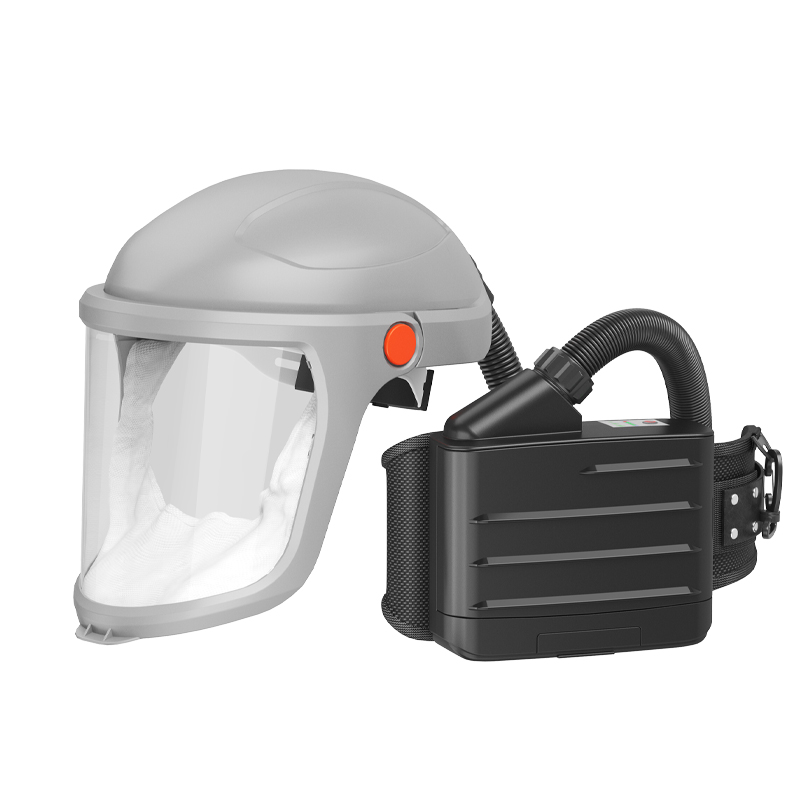
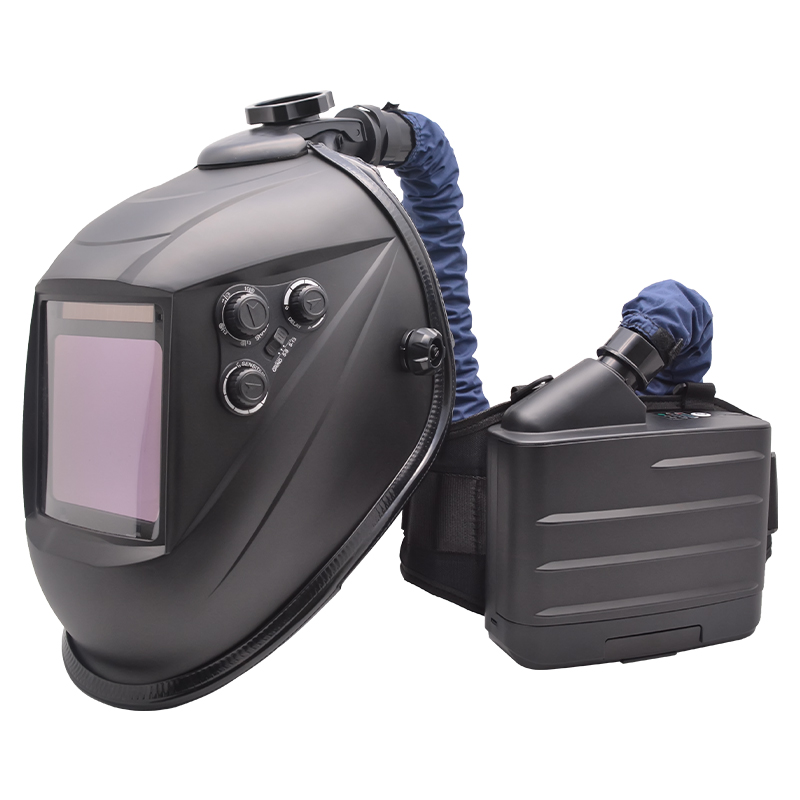
Respiradores purificadores de aire motorizados con capucha

Respiradores purificadores de aire motorizados con capucha

  • NIOSH PAPR: US Compliance & Testing Requirements
    NIOSH PAPR: US Compliance & Testing Requirements
    Jul 17, 2026
      In all industrial work environments across the United States, the compliance of Powered Air-Purifying Respirators (PAPRs) is strictly regulated under federal code 42 CFR Part 84. NIOSH certification serves as the only legally recognized qualification for respiratory protection devices and is fully enforced by OSHA. Unlike flexible regional protection standards, NIOSH approval is mandatory for all workplace applications, including general industry, construction, healthcare, and manufacturing.Only officially NIOSH-listed and approved PAPRs are permitted for on-site deployment. While most EHS managers and procurement professionals understand that PAPRs require NIOSH certification, many are unfamiliar with the full range of performance and durability tests required for official approval. This article provides a detailed breakdown of the complete NIOSH testing criteria that all qualified PAPRs must pass, helping safety professionals evaluate product quality, eliminate non-compliant equipment, and maintain standardized workplace safety.   Filter performance and filtration efficiency testing form the foundation of NIOSH’s PAPR grading system and represent the first critical stage of certification. Before formal testing, filter cartridges undergo standardized environmental preconditioning to simulate performance changes caused by long-term storage and humid working conditions. Two types of aerosol challenges are applied according to different hazard types: sodium chloride aerosol for solid dust environments and DOP oil aerosol for oil-based fume contaminants, which differentiates the application scope of N-series and P-series filters. Testing airflow rates are strictly defined based on papr system construction: 115 L/min for tight-fitting facepiece models and a minimum of 170 L/min for loose-fitting hood and helmet-style units. Throughout the full loading test, high-concentration particulate aerosol is continuously injected until the filter reaches saturation. Certified PAPRs must maintain stable filtration efficiency without excessive particulate penetration at any stage.   As motor-driven respiratory devices, PAPRs must pass NIOSH-specific airflow performance and battery durability tests. Under 42 CFR Part 84, PAPRs must sustain airflow above the minimum rated output even as filters become fully loaded and battery voltage gradually declines. Consistent positive pressure inside the facepiece or hood is essential to prevent external contaminant ingress. Professional breathing simulators are used to monitor inhalation and exhalation resistance throughout operation. Emergency power failure scenarios are also tested to ensure residual resistance does not hinder breathing during sudden motor shutdown. Additionally, PAPRs undergo extended continuous operation and extreme temperature cycling tests to verify battery and motor stability during full-shift, 8-hour work cycles, eliminating common field risks such as airflow dropouts, low-temperature shutdowns, and high-temperature battery failure. Total inward leakage and system tightness testing are core evaluations that determine real-world protective effectiveness. NIOSH enforces distinct testing protocols for the two mainstream PAPR designs. Tight-fitting facepiece PAPRs require quantitative fit testing with human test panels and corn oil aerosol to measure particle penetration through facial seals, headband connections, and assembly gaps. Loose-fitting hood and helmet papr respirator systems are exempt from facial fit testing but must comply with strict overall inward leakage limits. Critical inspection areas include neck seals, duct connections, and hood stitching joints. All units also undergo accelerated aging through repeated donning, doffing, and hose bending cycles to simulate long-term wear and seal degradation. Any leakage exceeding the standard threshold results in test failure.   Beyond core protection performance, NIOSH mandates a comprehensive set of structural durability, ergonomic, and functional tests to ensure long-term operational safety. Structural evaluations include drop resistance, repeated hose flexing, lens impact and abrasion resistance, and headband tensile strength, verifying component reliability under daily industrial wear. Ergonomic assessments are conducted with test subjects of different body types to ensure easy donning, unobstructed field of view, and comfortable long-duration wear. Additional functional tests cover operational noise levels and speech intelligibility to support effective on-site communication. For PAPRs equipped with gas cartridges, extra adsorption lifespan tests for organic vapors and acid gases are required to confirm certified service duration.   Overall, NIOSH establishes a rigorous, multi-dimensional testing framework under 42 CFR Part 84, covering filter efficiency, powered airflow stability, system tightness, structural durability, and ergonomic safety. These standardized requirements define the minimum safety benchmark for all respirators entering the U.S. market. For workplace safety and procurement teams, verifying PAPRs against these official NIOSH test criteria is essential to protecting workers from particulate and aerosol hazards, avoiding OSHA penalties for non-compliant PPE, and sustaining long-term regulatory compliance at industrial facilities.If you want know more, please click www.newairsafety.com.
    LEER MÁS
  • AS/NZS 1716:2012: Compliance Standard for PAPR Respirators
    AS/NZS 1716:2012: Compliance Standard for PAPR Respirators
    Jul 13, 2026
      In the industrial safety system of Australia and New Zealand, the compliance of respiratory protection equipment is a core part of workplace risk prevention and control. As an official standard for respiratory protective devices jointly issued by the two regions, AS/NZS 1716:2012 serves as the statutory basis for the access, testing, and application of all respiratory protection equipment. Many practitioners are familiar with the P1, P2, and P3 classification of disposable filtering masks, yet often overlook the profound correlation between this standard and Powered Air-Purifying Respirators (PAPRs). Unlike conventional passive respirators, PAPRs adopt an electric air supply system to actively purify air and reduce breathing resistance, delivering higher protection levels and broader application scenarios. Undoubtedly, AS/NZS 1716:2012 is the authoritative specification that defines the product performance, testing criteria, and compliance thresholds of PAPRs, as well as the core guideline for the selection, acceptance, and maintenance of papr air purifier equipment in Australian and New Zealand workplaces.   It is essential to clarify the core definition: AS/NZS 1716:2012 is not limited to regulating simple protective masks, but covers all categories of respiratory protection equipment including PAPRs. This standard stipulates the manufacturing requirements, performance indicators, testing methods, and certification specifications for various respiratory protective devices, applicable to all workplace scenarios involving harmful dust, aerosols, and particulate contaminants. Compared with traditional negative-pressure respirators, PAPRs feature unique electric air supply structures, enclosed designs, and continuous air delivery functions. Accordingly, the standard sets independent special testing dimensions for PAPRs, covering critical indicators such as air supply stability, filtration efficiency, overall equipment tightness, battery durability, and structural safety. It establishes a testing system completely different from that of ordinary masks, fundamentally preventing non-compliant PAPR devices from being put into workplace use.   The filtration classification system constitutes the core content of AS/NZS 1716:2012 for regulating PAPR protection performance. Adopting the exclusive Australian and New Zealand three-tier particulate filtration classification of P1, P2, and P3, the standard precisely defines the filter element performance of PAPRs. The P1 grade is suitable for low-concentration dust scenarios with basic filtration efficiency requirements met. The P2 grade can filter over 94% of fine particles of 0.3 microns, covering most industrial dust, welding fume, and aerosol scenarios, making it the mainstream configuration for workplace PAPRs. As the highest protection grade, P3 features stringent requirements for filtration accuracy and sealing performance, tailored for high-pollution and high-risk operating environments. All compliant powered respirators devices must be marked with the corresponding classification on the body or packaging. Products with air supply functions but without classification certification under this standard are not recognized by the Australian and New Zealand workplace safety system.   Beyond filter element filtration performance, AS/NZS 1716:2012 also stringently regulates the overall safety and operational performance of PAPRs. For the exclusive electric air supply system of PAPRs, the standard mandates stable airflow delivery to avoid insufficient air supply or airflow interruption, while imposing strict requirements on equipment airtightness, leakage prevention, and material safety. In addition, the standard differentiates the application requirements for tight-fitting and loose-fitting PAPRs, specifying that tight-fitting models must undergo professional fit testing while loose-fitting models are exempted, providing clear specifications for on-site enterprise implementation. Furthermore, the standard covers routine inspection, fault judgment, and service life thresholds for PAPRs, forming a standardized basis for daily equipment operation and maintenance. In the Australian and New Zealand workplace compliance framework, AS/NZS 1716:2012 forms a complementary closed-loop system with AS/NZS 1715:2009 to regulate the full lifecycle management of PAPRs. AS/NZS 1716 focuses on product performance and compliance certification, answering the core question of whether the equipment is qualified. In contrast, AS/NZS 1715 governs the selection, application, training, maintenance, and scrapping processes of equipment, standardizing correct operational practices. Enterprises adopting PAPRs must meet the requirements of both standards: the equipment itself shall be certified per AS/NZS 1716:2012, and its usage and maintenance procedures shall comply with AS/NZS 1715. This dual-standard system ensures the high-level protective performance of PAPRs can be fully realized, effectively reducing occupational health risks caused by dust and particulate pollutants.   In summary, AS/NZS 1716:2012 is the fundamental compliance benchmark for PAPR application in Australia and New Zealand. It not only builds a dedicated performance testing and classification system for PAPRs, distinguishing high-level powered air protection from ordinary negative-pressure protection, but also clarifies the access criteria and safety thresholds for workplace PAPR deployment. For industrial enterprises, safety practitioners, and equipment suppliers, a thorough understanding of the PAPR-specific specifications in this standard helps protect workers’ occupational health, eliminate potential safety hazards, ensure compliant equipment selection, and pass workplace safety inspections smoothly. It is an essential core criterion for standardized respiratory protection management across Australia and New Zealand.If you want know more, please click www.newairsafety.com.
    LEER MÁS

  • NEW AIR PAPR with Multi-Functional Flip-Up Welding Helmet
    NEW AIR PAPR with Multi-Functional Flip-Up Welding Helmet
    Jun 18, 2026
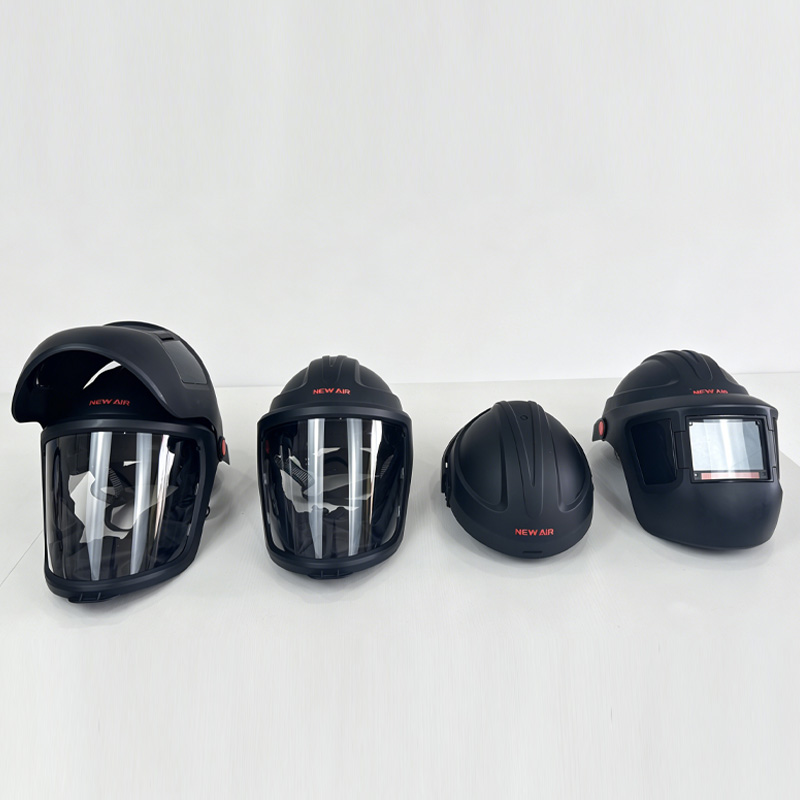
    For welders, grinders and construction workers, constantly switching between different safety gears wastes working hours, takes up storage space and brings hidden safety risks. Boasting an innovative modular structure, the NEW AIR flip-up welding safety helmet delivers genuine 4-in-1 performance. It can be quickly converted into four independent protection modes with just one unit, removing the need to purchase separate safety hard hats and welding masks. Whether you conduct metal grinding, arc welding, daily site operations, or work in dusty environments requiring powered air ventilation, this multi-functional helmet switches modes in seconds to match all kinds of working demands. The first basic mode: Integrated flip-up welding & grinding helmet. No disassembly is required, as it combines welding and grinding functions in one piece. After finishing welding work, simply flip up the welding cover to instantly switch to the clear grinding visor mode. You won’t need to take off the helmet repeatedly when alternating between welding and grinding tasks.   The second mode: Safety hard hat with panoramic clear protective visor. Remove the welding cover, and you will get full-face protection with an ultra-wide viewing area that blocks flying metal chips, grinding sparks, chemical splashes and dust. This mode is specially tailored for grinding, cutting, polishing and pre-processing procedures. Thanks to the flip-up structure, you can lift the entire clear visor with ease, allowing you to communicate with co-workers and inspect workpieces without removing the helmet, which greatly improves work efficiency during repetitive grinding operations.   The third basic mode: Standalone industrial safety hard hat. Take off the face visor, and the sturdy impact-resistant shell can be used alone as a standard construction hard hat. Certified to EN397 standards, it fully meets workplace safety codes for fall and impact resistance. It fits perfectly for daily site inspections, material handling, light assembly and other jobs that do not require full-face coverage. The thickened reinforced shell defends against falling debris, while the adjustable internal head harness delivers comfortable all-day wear for outdoor and workshop shift work. The fourth mode: Professional welding safety helmet. Remove the clear visor and install the welding cover, and the whole unit transforms into a dedicated welding mask. Its dual-window design features a large auto-darkening lens plus an auxiliary side viewing window, which greatly broadens the field of vision for TIG, MIG and stick welding. Traditional welding masks offer no head impact protection, but this all-in-one helmet retains the shock-resistant hard hat shell to protect your head from falling workpieces during welding. It also features a lighter overall weight for less fatigue.   What makes the NEW AIR helmet stand out above other multi-functional protective gears is its full compatibility with self-developed PAPR (Powered Air-Purifying Respirator). The helmet fitted with a clear visor can be directly matched with our proprietary air papr unit. During grinding, polishing and metal-dust-intensive work, the ventilation system continuously delivers filtered clean air into the helmet to prevent inhalation of harmful particles. The full welding configuration is also compatible with the matching blower: constant fresh airflow isolates toxic welding fumes, stops fogging on both the clear visor and auto-darkening lens, and eliminates the stuffy, suffocating discomfort that plagues users of enclosed welding masks after long hours of wear.   From basic construction site work and heavy-duty grinding to professional welding and high-fume high-risk industrial tasks, the NEW AIR flip-up welding safety helmet integrates four separate protective devices into a single unit. It delivers higher cost performance, saves storage space, and eliminates the trouble of frequently swapping safety equipment between different working procedures. When paired with the PAPR powered air supply system, it provides comprehensive protection for the head, face and respiratory tract all at once, making it the ideal all-in-one safety solution for welders and manufacturing industry practitioners.If you want know more, please click www.newairsafety.com.
    LEER MÁS
  • Por qué los carpinteros necesitan un PAPR
    Por qué los carpinteros necesitan un PAPR
    Dec 15, 2025
     Cuando se piensa en carpintería, a menudo vienen a la mente imágenes de virutas de madera volando y el rico aroma de la madera. Sin embargo, pocos prestan atención a los "asesinos de la salud" invisibles: el polvo de madera. Muchos artesanos están acostumbrados a usar mascarillas comunes mientras trabajan, pensando: "Mientras se bloqueen las partículas grandes, no hay problema". Pero con la creciente concienciación sobre la salud ocupacional, cada vez más profesionales recurren a... sistema paprHoy, exploraremos por qué la carpintería, un oficio aparentemente sencillo, requiere un equipo de protección tan profesional. En primer lugar, es fundamental comprender que los peligros del polvo de madera son mucho mayores de lo que se imagina. El procesamiento de la madera genera no solo virutas visibles, sino también una gran cantidad de partículas inhalables (PM2.5). Estas diminutas partículas pueden penetrar profundamente en las vías respiratorias y su acumulación a largo plazo puede provocar enfermedades profesionales como neumoconiosis y bronquitis. Lo que es más problemático es que el polvo de algunas maderas duras (como el palo de rosa y el roble) contiene componentes alergénicos, que pueden causar picazón en la piel y ataques de asma al contacto. Las mascarillas comunes tienen una eficiencia de filtración insuficiente o un sellado deficiente: el polvo puede filtrarse fácilmente por los espacios alrededor de la nariz y la barbilla, lo que reduce considerablemente su efecto protector. La principal ventaja de una respirador purificador de aire positivo reside en su "protección activa + filtración de alta eficiencia": aspira activamente el aire a través de un ventilador incorporado, lo filtra a través de un filtro HEPA y luego envía el aire limpio a la máscara, bloqueando la entrada de polvo en la fuente. La complejidad de los entornos de carpintería resalta aún más la irreemplazabilidad de las mascarillas PAPR. Los carpinteros realizan diversas tareas, desde serrar y cepillar hasta lijar y acabar. Cada proceso produce diferentes contaminantes: serrar madera dura genera gran cantidad de virutas afiladas, lijar polvo ultrafino y acabar puede conllevar la presencia de compuestos orgánicos volátiles (COV). Las mascarillas convencionales suelen ser ineficaces contra esta "contaminación compuesta", pero las PAPR pueden equiparse con diferentes filtros según el proceso: no solo filtran el polvo, sino que también protegen contra contaminantes gaseosos como los COV. Más importante aún, las operaciones de carpintería a menudo requieren agacharse y girarse con frecuencia, lo que puede desplazar fácilmente las mascarillas convencionales. Sin embargo, las mascarillas PAPR están diseñadas para ajustarse perfectamente al rostro y se fijan con diademas o cascos de seguridad. Incluso al agacharse para lijar una mesa o inclinar la cabeza para cortar madera durante largos periodos, mantienen un buen sellado. La comodidad durante largas jornadas de trabajo es una de las principales razones por las que los respiradores PAPR están ganando popularidad entre los carpinteros. Es habitual que los carpinteros trabajen más de 8 horas al día. Las mascarillas convencionales, especialmente las de alta protección como las N95, presentan poca transpirabilidad. Usarlas durante un tiempo prolongado puede causar opresión en el pecho, dificultad para respirar y dejar marcas en la cara. Los PAPR, por otro lado, mantienen una ligera presión positiva dentro de la mascarilla mediante un suministro continuo de aire activo, lo que facilita la respiración y reduce eficazmente la congestión. Algunos pueden pensar respiradores motorizados Son más caras que las mascarillas convencionales y ofrecen una baja rentabilidad. Sin embargo, desde la perspectiva de los costos de salud a largo plazo, esta inversión definitivamente vale la pena. El costo del tratamiento de enfermedades profesionales como la neumoconiosis es alto y, una vez contraídas, son difíciles de curar, lo que afecta gravemente la calidad de vida y la capacidad laboral. Un PAPR fiable puede usarse durante mucho tiempo siempre que el filtro se reemplace regularmente. No solo protege la salud, sino que también evita la pérdida de tiempo de trabajo por enfermedad. Para los estudios profesionales de carpintería, proporcionar PAPR a sus empleados también es una muestra de responsabilidad corporativa, lo que puede mejorar la cohesión del equipo y la seguridad laboral. La carpintería es un oficio que requiere paciencia e ingenio. Proteger su salud es esencial para heredar este oficio. Las mascarillas comunes pueden ser suficientes para entornos con poco polvo a corto plazo, pero para operaciones complejas de carpintería a largo plazo, la protección, la comodidad y la seguridad sanitaria de alta eficiencia que ofrecen los PAPR son irremplazables por el equipo de protección convencional. No permita que la simple costumbre o el simple hecho de no preocuparse se conviertan en amenazas ocultas para su salud. Incorpore un PAPR a su banco de carpintería y haga que cada sesión de cepillado y lijado sea más segura. Para obtener más información, haga clic aquí. www.newairsafety.com.
    LEER MÁS

  • Protección respiratoria para soldadura: PAPR en 4 métodos de soldadura
    Protección respiratoria para soldadura: PAPR en 4 métodos de soldadura
    Oct 25, 2025
    En la soldadura, los humos y gases tóxicos amenazan la salud respiratoria de los trabajadores. Como dispositivo de protección eficaz, Sistema de respirador de aire motorizado Actúan como una "barrera respiratoria" en diversos escenarios de soldadura. Comprender cómo se adaptan los respiradores con purificación de aire motorizada (PAPR) a los diferentes métodos de soldadura es fundamental para la seguridad. La soldadura por arco metálico protegido (SMAW) produce grandes cantidades de humos metálicos (por ejemplo, óxido de hierro, dióxido de manganeso) que causan neumoconiosis. Las mascarillas tradicionales tienen una eficacia limitada y ofrecen una alta resistencia a la respiración. Respirador motorizado Utiliza un ventilador incorporado para suministrar aire filtrado, solucionando los problemas de resistencia y bloqueando más del 95% de los humos finos con cartuchos de filtro de alta eficiencia. La soldadura y el corte por arco de plasma generan vapor metálico y ozono en altas concentraciones debido a las temperaturas extremas. El respirador con purificación de aire motorizada (PAPR) ofrece doble protección con filtros específicos para ozono y filtros de alta eficiencia. Su careta de visión amplia satisface las necesidades de precisión de las operaciones de plasma sin comprometer la eficiencia. El corte por arco de carbono libera polvo de carbono, humos de óxido de hierro y gases tóxicos (CO, óxidos de nitrógeno). El sistema PAPR utiliza filtros compuestos para eliminar tanto los humos como los gases, mientras que su careta facial sellada evita la fuga de contaminantes, brindando una protección integral. La soldadura y el corte con oxicombustible dependen de gases combustibles, que producen gases tóxicos (CO, acetileno) que se acumulan en áreas mal ventiladas. Respirador con suministro de aire motorizado Está equipado con filtros para vapores orgánicos que absorben gases nocivos, y su sistema de presión positiva bloquea los contaminantes externos, incluso en espacios cerrados. Desde soldadura SMAW hasta corte con oxicombustible, los sistemas PAPR se adaptan a diversas características de contaminantes gracias a su filtrado flexible, suministro activo de aire y protección sellada. Elegir el PAPR adecuado protege la salud de los trabajadores y aumenta la seguridad operativa. Si desea obtener más información, por favor www.newairsafety.com.
    LEER MÁS

dejar un mensaje

dejar un mensaje
Si está interesado en nuestros productos y desea conocer más detalles, deje un mensaje aquí, le responderemos lo antes posible.
ENTREGAR
Contáctenos: sales@txhyfh.com

HOGAR

PRODUCTOS

WhatsApp

Contáctanos