inquiry
dejar un mensaje
Si está interesado en nuestros productos y desea conocer más detalles, deje un mensaje aquí, le responderemos lo antes posible.
ENTREGAR
Tecnología de protección de soldadura Bengbu Longkai Co., Ltd.
HOGAR

mascarilla respiratoria papr

mascarilla respiratoria papr

  • Demolition Work: Choosing the Right PAPR
    Demolition Work: Choosing the Right PAPR
    Jan 20, 2026
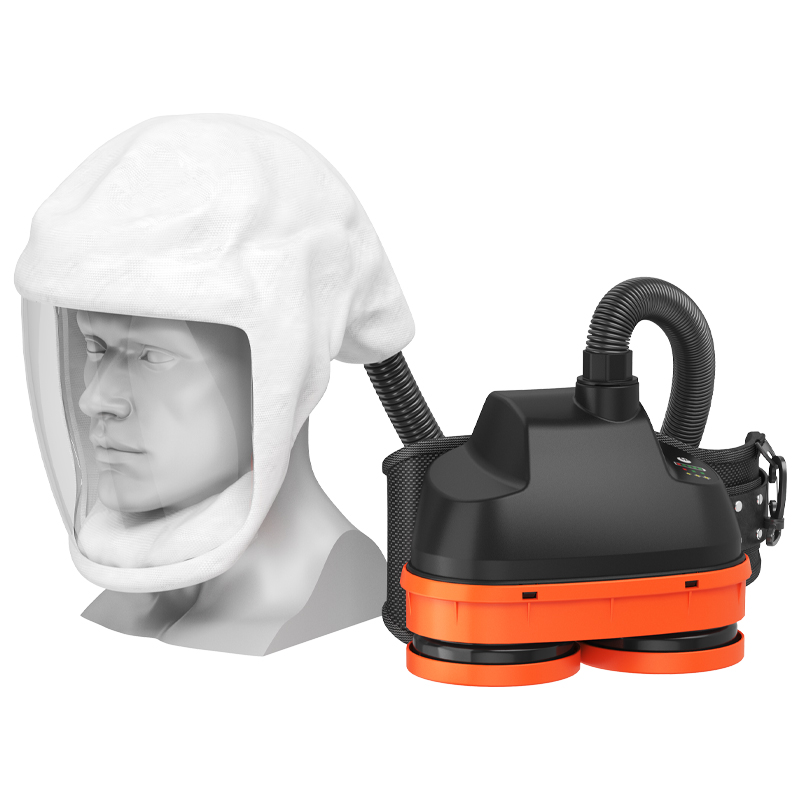
      Demolition work involves complex and variable environments. From breaking down walls of old buildings to dismantling industrial facilities, pollutants such as dust, harmful gases, and volatile organic compounds (VOCs) are pervasive, placing extremely high demands on respiratory protection for workers. battery powered respirator have become core protective equipment in demolition work due to their advantages of positive pressure protection and low breathing load. However, not all PAPRs are suitable for all scenarios; selecting the right type is essential to build a solid line of defense for respiratory safety. Compared with traditional negative-pressure respirators, PAPRs actively deliver air through an electric fan, which not only reduces breathing fatigue during high-intensity operations but also prevents pollutant leakage through the positive pressure environment inside the mask, significantly improving protection reliability.   For general dust-generating demolition operations, particulate-filtering PAPRs are preferred. Such operations commonly involve the demolition of concrete, masonry, wood, and other components, with respirable dust—especially PM2.5 fine particles—as the primary pollutant. Long-term inhalation can easily induce pneumoconiosis. When selecting a model, high-efficiency particulate filters should be used, and the mask can be chosen based on operational flexibility needs. For open-air scenarios such as ordinary wall breaking and floor demolition, air-fed hood-type PAPRs are more suitable. They do not require a facial fit test, offer strong adaptability, and can also provide head impact protection. For narrow workspaces with extremely high dust concentrations, it is recommended to use tight-fitting full-face PAPRs, which have a minimum air flow rate of no less than 95L/min, forming a tight seal on the face to prevent dust from seeping through gaps.   For demolition operations involving harmful gases, combined-filtering PAPRs are required. During the demolition of old buildings, volatile organic compounds such as formaldehyde and benzene are emitted from paints and coatings, while the dismantling of industrial facilities may leave toxic gases such as ammonia and chlorine. In such cases, a single particulate-filtering PAPR cannot meet protection needs. Dual-filter elements (particulate + gas/vapor) should be used, with precise selection based on pollutant types: activated carbon filter cartridges for organic vapors, and chemical adsorption filter elements for acid gases. For these scenarios, positive-pressure tight-fitting PAPRs are preferred. Combined with forced air supply, they not only effectively filter harmful gases but also reduce pollutant residue inside the mask through continuous air supply, while avoiding poisoning risks caused by mask leakage.   Special scenarios require targeted selection of dedicated loose fitting powered air purifying respirators. Demolishing asbestos-containing components is a high-risk operation—once inhaled, asbestos fibers cause irreversible lung damage. PAPRs complying with asbestos protection standards should be used, paired with high-efficiency HEPA filters. Additionally, hood-type designs must be adopted to avoid fiber leakage due to improper wearing of tight-fitting masks. Meanwhile, the hood should be used with chemical protective clothing to form full-body protection. For demolition in confined spaces such as basements and pipe shafts, oxygen levels must first be tested. If the oxygen concentration is not less than 19% (non-IDLH environment), portable positive-pressure PAPRs can be used with forced ventilation systems. If there is a risk of oxygen deficiency, supplied-air respirators must be used instead of relying on PAPRs.   PAPR selection must balance compliance with standards and operational practicality.  Adjustments should also be made based on labor intensity: most demolition work is moderate to high intensity, so Powered Air Purifying Respirator TH3 are more effective in reducing breathing load, preventing workers from removing protective equipment due to fatigue. Battery life must match operation duration—for long-term outdoor operations, replaceable battery models are recommended to ensure uninterrupted protection. Furthermore, filter elements must be replaced strictly on schedule: gas filter cartridges should be replaced within 6 months of opening, or immediately if odors occur or resistance increases, to avoid protection failure.   Finally, it should be noted that PAPRs are not universal protective equipment, and their use must be based on a comprehensive risk assessment. Before demolition work, on-site testing should be conducted to identify pollutant types, concentrations, and environmental characteristics, followed by selecting the appropriate PAPR type for the scenario.  Only by selecting and using PAPRs correctly can we build a reliable barrier for respiratory health in complex demolition work, balancing operational efficiency and safety protection.If you want know more, please click www.newairsafety.com.
    LEER MÁS
  • PAPR Air Inlet Modes: Practical Differences & Selection Logic
    PAPR Air Inlet Modes: Practical Differences & Selection Logic
    Jan 16, 2026
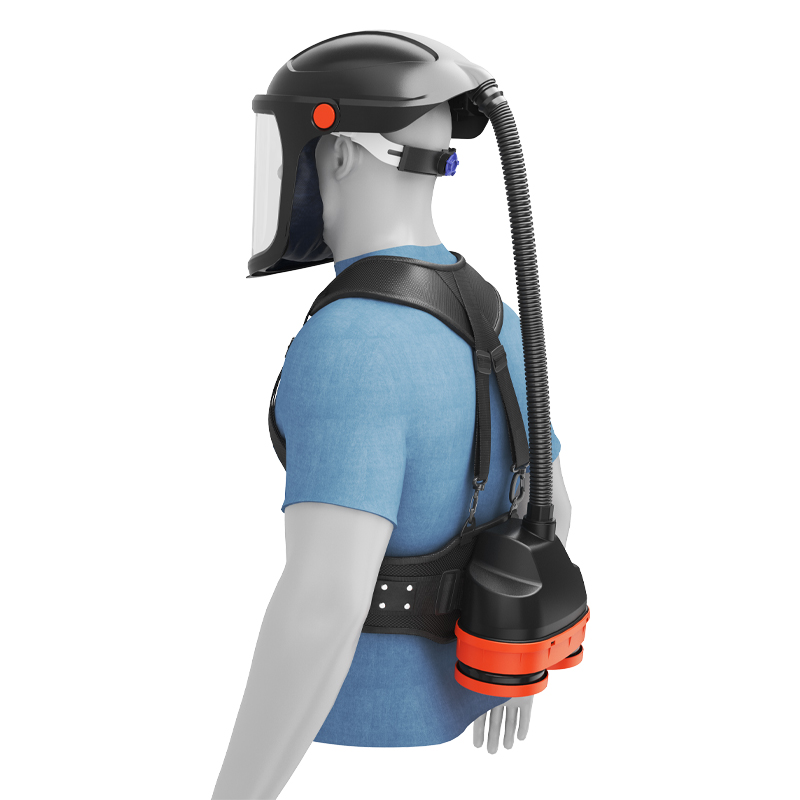
      In air purification respirator application scenarios, most users focus more on filtration efficiency and protection level, but often overlook the potential impact of air inlet modes on actual operations. this article focuses on the differences of front, side and back air inlet modes in wearing adaptability, scenario compatibility, energy consumption control and special population adaptation from the perspective of on-site operational needs. The choice of air inlet mode is not only related to protection effect but also directly affects operational continuity, equipment loss rate and employees' acceptance of the equipment. Its importance becomes more prominent especially in scenarios with multiple working condition switches and long-term operations.   The core competitiveness of front air inlet PAPR lies in lightweight adaptation and emergency scenario compatibility, rather than simple air flow efficiency. This design concentrates the core air inlet and filter components in front of the head, with the overall equipment weight more concentrated and the center of gravity forward, adapting to most standard head shapes without additional adjustment of back or waist load, being more friendly to workers who are thin or have old back injuries. In emergency rescue, temporary inspection and other scenarios, the front air inlet PAPR has significant advantages in quick wearing; without cumbersome hose connection, it can be worn immediately after unpacking, gaining time for emergency disposal. However, potential shortcomings cannot be ignored: the forward center of gravity may cause neck soreness after long-term wearing, especially when used with safety helmets, the head load pressure is concentrated, making it unsuitable for continuous operations of more than 8 hours; at the same time, the front air inlet is easily blown back by breathing air flow, leading to moisture condensation on the surface of the filter unit, which is prone to mold growth in high-humidity environments, affecting filter service life and respiratory health.   The core advantage of side air inlet PAPR is multi-equipment coordination adaptability and air flow comfort, which is the key to its being the first choice for comprehensive working conditions. In industrial scenarios, workers often need to match safety helmets, goggles, communication equipment and other equipment. The arrangement of the side air inlet unit can avoid the equipment space in front of and on the top of the head, prevent mutual interference, and not affect the wearing stability of the safety helmet. Compared with the direct air flow of the front air inlet, the side air inlet can achieve "face-surrounding air supply" through a flow guide structure, with softer air flow speed, avoiding dryness caused by direct air flow to the nasal cavity and eyes, and greatly improving tolerance for long-term operations. Its limitations are mainly reflected in bilateral adaptability: single-side air inlet may lead to uneven head force, while double-side air inlet will increase equipment volume, which may collide with shoulder protective equipment and operating tools; in addition, the flow guide channel of the side air inlet unit is narrow; if the filtration precision of the filter unit is insufficient, impurities are likely to accumulate at the flow guide port, affecting air flow smoothness.   The core value of back air inlet papr air purifier lies in extreme working condition adaptation and equipment loss control, especially suitable for high-frequency and high-intensity operation scenarios. Integrating core components such as air inlet, power and battery into the back, only a lightweight hood and air supply hose are retained on the head, which not only completely frees up the head operation space but also avoids collision and wear of core components during operation, significantly reducing equipment maintenance and replacement costs. The weight of the back component is evenly distributed; matched with adjustable waist belt and shoulder straps, it can disperse the load to the whole body. Compared with front and side air inlets, it is more suitable for long-term and high-intensity operations. Moreover, the long back air flow path can be equipped with a simple heat dissipation structure to alleviate equipment overheating in high-temperature environments. However, this mode has certain requirements for the working environment: the back component is relatively large, unsuitable for narrow spaces, climbing operations and other scenarios; as the core connection part, if the hose material has insufficient toughness, it is prone to bending and aging during large limb movements, and dust is easy to accumulate on the inner wall of the hose, making daily cleaning more difficult than front and side air inlet equipment.   The core logic of selection is the adaptive unity of "human-machine-environment", rather than the optimal single performance. If the operation is mainly temporary inspection and emergency disposal with high personnel mobility, front air inlet PAPR should be preferred to balance wearing efficiency and lightweight needs; for regular industrial operations requiring multiple protective equipment and long operation time, side air inlet is the choice balancing comfort and coordination; for high-frequency, high-intensity operations with strict requirements on equipment loss control, back air inlet is more cost-effective. In addition, special factors should be considered: front air inlet should be avoided in high-humidity environments to prevent moisture condensation; back air inlet should be excluded in narrow space operations, and lightweight front or side air inlet should be preferred; for scenarios with high communication needs, side air inlet is easier to coordinate with communication equipment.   The iterative design of papr respirator air inlet modes is essentially the in-depth adaptation to operational scenario needs. From the initial front air inlet to meet basic protection, to the side air inlet balancing comfort and coordination, and then to the back air inlet adapting to extreme working conditions, each mode has its irreplaceable value. For enterprises, selection should not only focus on equipment parameters but also combine feedback from front-line workers and detailed differences of operation scenarios, so that PAPR can become an assistant to improve operational efficiency rather than a burden while ensuring safety. In the future, with the popularization of modular design, switchable air inlet modes may become mainstream, further breaking the scenario limitations of a single air inlet mode.If you want know more, please click www.newairsafety.com.
    LEER MÁS
  • Componentes clave de los cartuchos de máscaras de gas: formulaciones específicas adaptadas a los tipos de gas protegidos
    Componentes clave de los cartuchos de máscaras de gas: formulaciones específicas adaptadas a los tipos de gas protegidos
    Aug 26, 2025
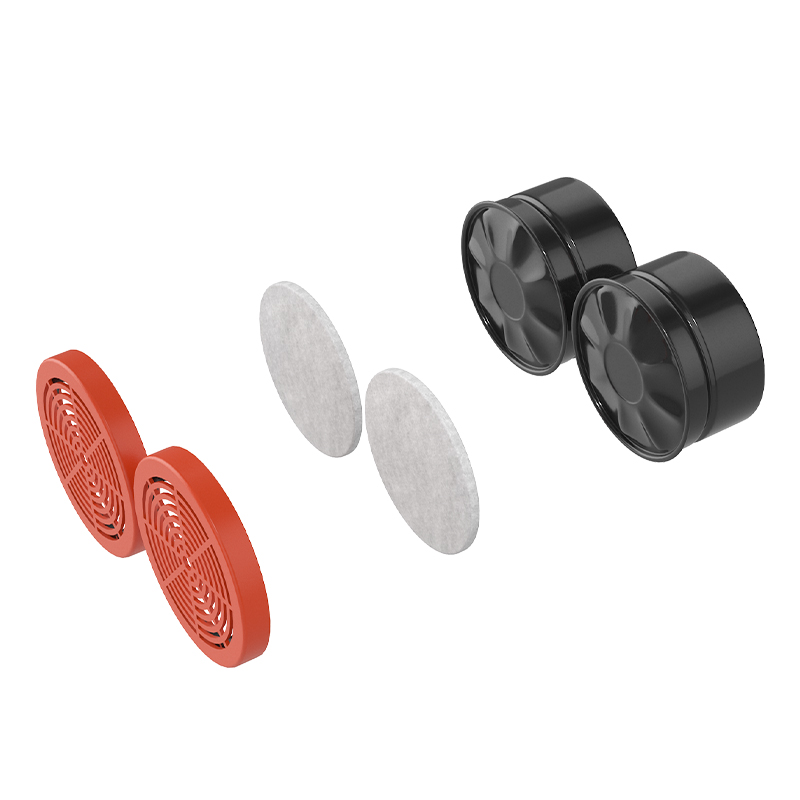
    Los componentes principales de los cartuchos de las máscaras de gas varían significativamente según el objetivo de protección (series A/B/E/K). En esencia, se utilizan componentes específicos para abordar las propiedades químicas de gases específicos, una precisión vital cuando estos cartuchos se combinan con Respiradores purificadores de aire motorizados, que no puede compensar materiales de filtro inadecuados o ineficaces. A continuación, se presenta una explicación correspondiente a la clasificación del tipo de gas mencionada anteriormente, centrándose en la relevancia para PAPR:​1. Para la serie A (gases/vapores orgánicos, p. ej., benceno, gasolina): carbón activado como núcleo​Componente principal: Carbón activado de alta superficie específica (principalmente carbón de cáscara de coco o carbón vegetal, con una porosidad superior al 90 %). La superficie de 1 gramo de carbón activado equivale a la de un campo de fútbol.Principio de funcionamiento: Utiliza la adsorción física del carbón activado: las moléculas de gas orgánico se adsorben en los microporos del carbón activado debido a las fuerzas de van der Waals y no pueden entrar en la zona de respiración con el flujo de aire. Esto lo hace ideal para su uso en Respiradores purificadores de aire motorizados papr Se utiliza en tareas de pintura o manipulación de disolventes, donde la exposición continua a vapores orgánicos requiere una adsorción confiable y duradera.Optimización mejorada: para gases orgánicos de bajo punto de ebullición de la serie A3 (por ejemplo, metano, propano, que son extremadamente volátiles), se utiliza "carbón activado impregnado" (agregado con pequeñas cantidades de sustancias como silicona) para mejorar la capacidad de adsorción de gases orgánicos de moléculas pequeñas, fundamentales para respirador purificador de aire de presión positiva Se utiliza en refinerías de petróleo o plantas de procesamiento de gas natural. 2. Para la serie B (gases/vapores inorgánicos, por ejemplo, cloro, dióxido de azufre): adsorbentes químicos como componente principal​Componente principal: Carbón activado impregnado + óxidos metálicos (ej. sulfato de cobre, permanganato de potasio, hidróxido de calcio).Principio de funcionamiento: La mayoría de los gases inorgánicos son altamente oxidantes o irritantes y deben convertirse en sustancias inocuas mediante reacciones químicas. Por ejemplo:El cloro (Cl₂) reacciona con el hidróxido de calcio para formar cloruro de calcio (un sólido inofensivo);El dióxido de azufre (SO₂) se oxida a sulfato (fijado en el material del filtro después de disolverse en agua) al reaccionar con permanganato de potasio.Esta estabilidad química es imprescindible para los respiradores purificadores de aire motorizados utilizados en plantas de fabricación de productos químicos, donde los picos repentinos en las concentraciones de gases inorgánicos exigen una neutralización rápida y efectiva.​3. Para la serie E (gases/vapores ácidos, por ejemplo, ácido clorhídrico, fluoruro de hidrógeno): neutralizadores alcalinos​Componente principal: Hidróxido de potasio (KOH), hidróxido de sodio (NaOH) o carbonato de sodio (soportado sobre carbón activado o portadores inertes).Principio de funcionamiento: Utiliza una reacción de neutralización ácido-base para convertir gases ácidos en sales (inofensivas y no volátiles). Por ejemplo:El ácido clorhídrico (HCl) reacciona con hidróxido de potasio para formar cloruro de potasio (KCl) y agua;El fluoruro de hidrógeno (HF) reacciona con el hidróxido de sodio para formar fluoruro de sodio (NaF, un sólido), evitando que corroa el tracto respiratorio.Esta fórmula resistente a la corrosión es esencial para los respiradores purificadores de aire motorizados que se utilizan en talleres de decapado o en la fabricación de semiconductores, donde los vapores ácidos plantean riesgos tanto para la salud como para los equipos.​4. Para la serie K (gases/vapores de amoníaco y amina, por ejemplo, amoníaco, metilamina): adsorbentes ácidos​Componente principal: Carbón activado impregnado con ácido fosfórico (H₃PO₄) o sulfato de calcio.Principio de funcionamiento: El amoníaco y las aminas son gases alcalinos y se fijan mediante neutralización ácido-base. Por ejemplo:El amoníaco (NH₃) reacciona con el ácido fosfórico para formar fosfato de amonio ((NH₄)₃PO₄, un sólido);La metilamina (CH₃NH₂) reacciona con el sulfato de calcio para formar sales estables que ya no se volatilizan.Esta neutralización dirigida es clave para los respiradores purificadores de aire motorizados utilizados en plantas de fertilizantes o instalaciones de almacenamiento frigorífico, donde las fugas de amoníaco son un peligro común.​III. "Lógica de correspondencia" entre estructura y componentes: ¿Por qué no se pueden mezclar los cartuchos de las máscaras de gas?​Del contenido anterior se desprende que la estructura en capas y la selección de componentes de los cartuchos de las máscaras de gas están diseñadas íntegramente en torno al objetivo de protección, un principio aún más crítico cuando se combinan con respiradores purificadores de aire motorizados, ya que estos dispositivos amplifican tanto la eficacia de los cartuchos correctos como los riesgos de los incorrectos.​Si se utiliza un cartucho de máscara de gas de la Serie A (carbón activado) para proteger contra gases ácidos de la Serie E con respiradores purificadores de aire motorizados, los gases ácidos penetrarán directamente en el carbón activado (no se produce ninguna reacción de neutralización) y el flujo de aire continuo del PAPR entregará estos gases sin filtrar directamente al usuario;Si un cartucho de máscara de gas Serie K (adsorbente ácido) se expone a cloro Serie B (altamente oxidante) en respiradores purificadores de aire motorizados, pueden ocurrir reacciones adversas e incluso pueden producirse sustancias tóxicas, sustancias que luego el PAPR hará circular en la zona de respiración.Esto también refleja la "regla de oro de la selección" mencionada anteriormente: los cartuchos de máscara de gas de la serie correspondiente deben seleccionarse de acuerdo con el tipo de gas en el entorno de trabajo para garantizar que la estructura y los componentes realmente cumplan su función, especialmente cuando se integran con respiradores purificadores de aire motorizados.​Conclusión​Un cartucho de máscara de gas no es un contenedor monomaterial, sino una sofisticada combinación de estructura en capas y componentes específicos, diseñada para funcionar en armonía con los respiradores purificadores de aire motorizados (PAPR). La carcasa exterior garantiza el sellado del flujo de aire del PAPR, la capa de preprocesamiento filtra las impurezas para mantener la eficiencia del PAPR, y la capa central de adsorción/neutralización dirige con precisión gases específicos para mantener limpio el aire suministrado por el PAPR. En definitiva, logra el efecto protector de "impedir la entrada de gases nocivos y permitir la salida de aire limpio". Comprender estos detalles no solo nos ayuda a seleccionar los cartuchos de las máscaras de gas de forma más científica para las máscaras estándar, sino que es aún más crucial para los usuarios de respiradores purificadores de aire motorizados (PAPR), quienes confían en la sinergia entre el cartucho y el PAPR para una protección consistente y confiable. También nos permite determinar con mayor claridad cuándo reemplazar los cartuchos durante el uso (por ejemplo, el efecto de protección disminuirá drásticamente después de que la capa de adsorción central se sature), lo que añade una línea de defensa para la seguridad respiratoria, especialmente para quienes dependen de respiradores purificadores de aire motorizados en entornos de alto riesgo. Para obtener más información, haga clic aquí. www.neairsafety.com.
    LEER MÁS

dejar un mensaje

dejar un mensaje
Si está interesado en nuestros productos y desea conocer más detalles, deje un mensaje aquí, le responderemos lo antes posible.
ENTREGAR
Contáctenos: sales@txhyfh.com

HOGAR

PRODUCTOS

WhatsApp

Contáctanos